

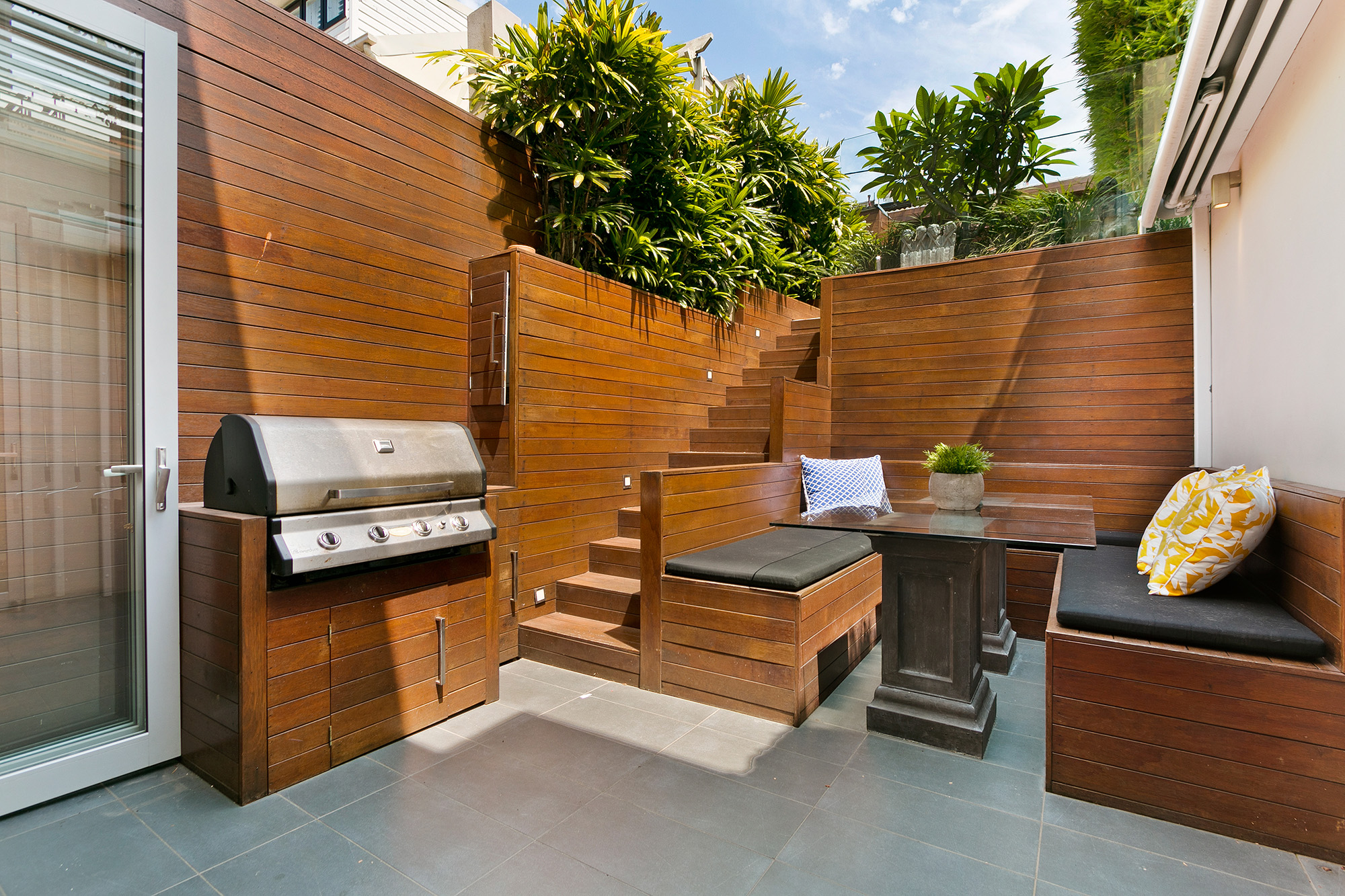
Outdoor kitchens have become one of the more popular additions for Long Island homeowners looking to get more use out of their backyards, but our climate asks more of outdoor materials than a lot of people expect. Humid summers, salt air in coastal pockets, freeze-thaw winters, and everything in between means the materials that work fine in a photo from a warmer climate don't always hold up here. Here's what's worth knowing before you plan one.
Why Long Island's Climate Is the Real Test
An outdoor kitchen here deals with a wider range of conditions than most people plan for. Summer humidity and rain are followed by winter freeze-thaw cycles, and homes closer to the Sound or the South Shore also contend with salt air, which accelerates corrosion on anything with exposed metal fasteners or hardware. The materials that handle one of these conditions well don't necessarily handle all of them, which is why material choice matters more outdoors than it does inside.
Cabinetry Built for the Elements
Standard indoor cabinet materials, including many wood species and particleboard constructions, aren't designed for direct exposure to moisture and temperature swings and will warp, swell, or deteriorate outdoors over time. Outdoor cabinetry needs to be built with weather-resistant materials specifically, along with hardware rated for exterior use so hinges and pulls don't corrode.
It's also worth thinking about how the cabinetry is used. Storage for grilling tools and outdoor essentials has different moisture and ventilation needs than storage built around appliances like a cooler or a mini fridge, so the construction should match what's actually going inside it.
Countertops That Can Take the Weather
Not every countertop material that performs well indoors is a good fit outdoors. Marble, for instance, is more prone to etching and staining even inside, and that sensitivity only increases with constant outdoor exposure to rain, pollen, and UV light. Porcelain tends to be a strong outdoor performer because it resists heat, UV exposure, scratches, and stains, which is exactly the combination an outdoor kitchen needs. Certain quartz and granite options can also work well outdoors, but it's worth confirming with your design team that the specific slab and finish you're considering is rated for exterior use, since not all are.
Don't Overlook the Small Details
A lot of outdoor kitchen durability comes down to details that are easy to skip past. Covered versus fully exposed installations change what materials make sense. A pergola or roof overhead meaningfully reduces UV and moisture exposure, which opens up more material options than a fully open-air setup would. Drainage and grading around the cabinetry also matter, since standing water sitting against cabinet bases is one of the more common causes of early wear, regardless of how weather-resistant the materials are.
Plan It Like the Rest of Your Home, Not an Afterthought
The outdoor kitchens that hold up well are the ones planned with the same care as an indoor renovation: the right materials for the specific conditions of the site, proper installation, and realistic expectations about maintenance. It's reasonable to expect an outdoor kitchen to need more regular upkeep than an indoor one no matter what materials you choose. The goal is minimizing that upkeep with the right choices up front, not eliminating it entirely.
At Artistic Cabinetry, we help homeowners choose outdoor cabinetry and surfaces built to handle what Long Island weather actually brings, not just what looks good in a showroom. We serve Smithtown, St. James, Nesconset, Stony Brook, and East Setauket, NY, with design consultations available at Smithtown, NY.
If you're considering an outdoor kitchen for your backyard, contact us to talk through materials, layout, and what will genuinely hold up season after season.