

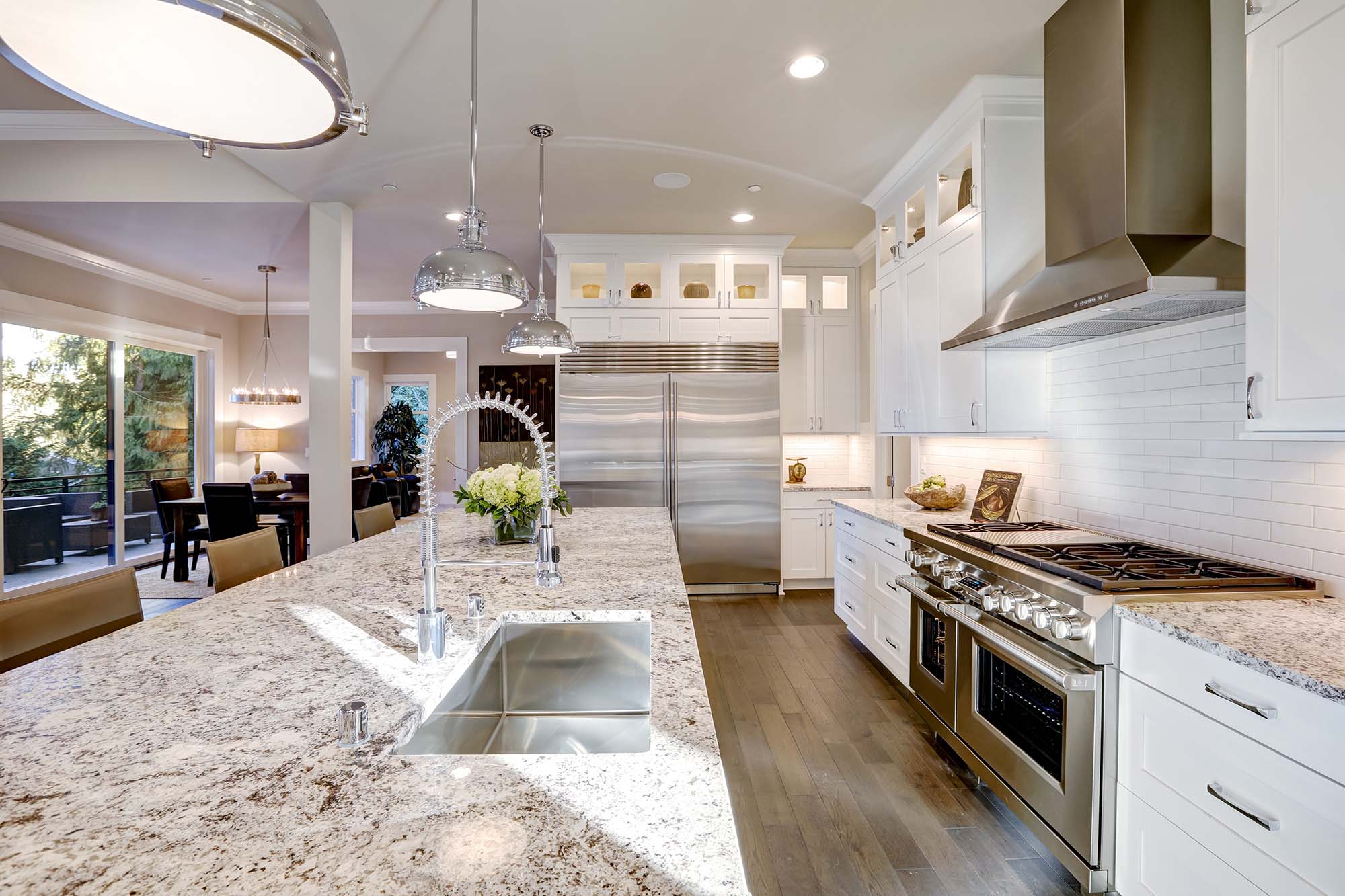
Quartz is an engineered surface made from crushed natural quartz bound with resins and pigments. That composition gives it uniformity, consistent color, and a non-porous surface that does not require sealing. For busy kitchens in Smithtown homes, this means resistance to staining from common culprits like coffee, oil, and wine without ongoing upkeep.
Where quartz starts to show its limits is heat and long-term wear at stress points. The resin content can discolor or warp under direct heat, so hot pans straight from the stove are a risk. Over time, heavy-use zones like sink cutouts and cooktop edges can also show subtle wear patterns if not properly fabricated and supported.
What Quartzite Actually Is and Where It Excels
Quartzite is a natural stone formed under heat and pressure, making it significantly harder than many other countertop materials. It offers high resistance to scratching and can tolerate heat better than quartz, which makes it appealing for homeowners who cook frequently and use their kitchens intensively.
However, quartzite is porous and requires sealing to maintain performance. Without proper sealing, it can absorb liquids and develop stains, particularly from acidic or oily substances. Maintenance becomes part of ownership, and the variability in slabs means each installation behaves slightly differently depending on density and mineral composition.
Maintenance Reality Most Homeowners Overlook
Quartz is often marketed as maintenance-free, and in practical terms, it comes close. Cleaning typically involves mild soap and water, and there is no sealing schedule to manage. For households that prioritize convenience, this predictability is a major advantage.
Quartzite demands a more hands-on approach. Sealing intervals vary but are typically required every 6 to 12 months depending on usage. Skipping this step increases the risk of staining and etching, which can be difficult to reverse without professional intervention.
Heat, Stains, and Long Term Wear in Real Kitchens
Quartz performs well under everyday conditions but struggles with thermal shock. Placing a hot pan directly on the surface can cause discoloration or micro-cracking in the resin structure. Using trivets is not optional if longevity is the goal.
Quartzite handles heat far better and is less likely to be damaged by high temperatures. However, it is more susceptible to staining if not sealed properly. This creates a trade-off where quartz is easier to maintain, but quartzite is more forgiving under heat stress.
Which One Makes Sense for Smithtown Homes
For households that value low maintenance, consistent appearance, and ease of cleaning, quartz is the safer and more predictable choice. It aligns well with busy family kitchens where spills and daily wear are constant factors.
For homeowners who prioritize natural materials, higher heat resistance, and unique visual character, quartzite offers a premium feel. It works best when the homeowner is willing to maintain it properly and understands the variability that comes with natural stone.
Choosing between quartz and quartzite is less about which is better and more about how you use your kitchen. The right choice depends on your tolerance for maintenance, your cooking habits, and how much variation you want in your space.
Visit Artistic Cabinetry at Smithtown, NY to compare slabs in person and understand how each material performs under real conditions. We serve Smithtown, St. James, Nesconset, Stony Brook, and East Setauket, NY including Smithtown, St. James, Nesconset, Stony Brook, and East Setauket.
Contact us today to get expert guidance and start planning a kitchen that works as well as it looks.